
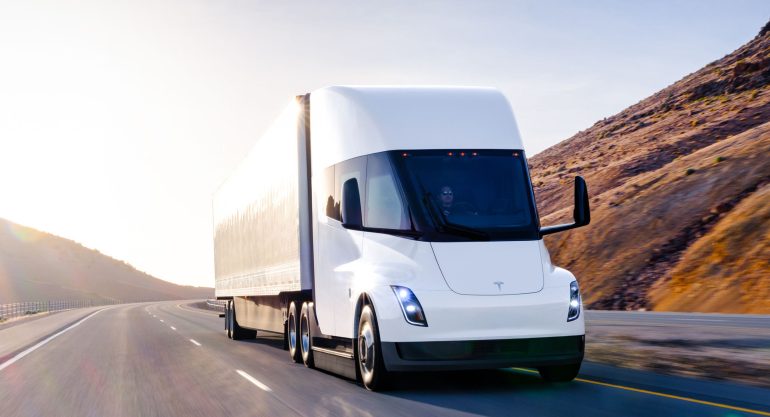
The Tesla Semi is an all-electric commercial truck designed to revolutionize freight transport by offering superior performance, a substantial range, and advanced technology compared to traditional diesel rigs.
Performance and Capabilities
The Semi is powered by a high-performance, three-independent-motor system on the rear axles, similar in principle to the Plaid powertrain found in Tesla’s passenger vehicles, but optimized for heavy hauling.
- Power: The three motors provide instant torque and immense power, estimated at over 1,000 horsepower, giving it a significant power advantage over conventional diesel trucks which typically range from 400 to 600 hp.
- Acceleration: The Semi can accelerate from 0 to 60 mph in just 20 seconds even when fully loaded with a gross combination weight of 82,000 pounds (the legal limit for electric trucks on U.S. roads with an exemption for extra battery weight).
- Speed Uphill: It is designed to maintain highway-level speeds even up steep 5% grades, significantly faster than a typical diesel truck which might slow to 45 mph on the same incline.
- Efficiency: Tesla claims energy consumption of less than 2 kilowatt-hours per mile (1.25 kWh per kilometer).
- Towing: It has a maximum gross combined weight rating of 82,000 pounds, which is the standard weight limit for semi-trucks.
Electric Range and Charging
The Semi is offered with two primary range options:
- Range: Approximately 300 miles or 500 miles on a single charge. Tesla has verified the 500-mile range with fully loaded test drives between Fremont and San Diego.
- Charging: The vehicle features a new “Megacharger” system with a peak power of 1 megawatt (or more), capable of recovering up to 70% of the range in approximately 30 minutes. This aligns charging time with a driver’s federally mandated rest break, minimizing operational downtime.
- Battery: The battery pack is integrated into the chassis and is estimated to be around 600 kWh for the standard range and 1,000 kWh (1 MWh) for the long-range model.
Design and Safety
The design is highly aerodynamic, with a drag coefficient of just 0.36 (compared to 0.65 to 0.70 for traditional diesel trucks), contributing significantly to its efficiency.
- Driver Position: A unique central seating position gives the driver optimal visibility.
- Interior: The cabin features two large, horizontal touchscreens on either side of the steering wheel for navigation, data logging, and monitoring blind spot cameras.
- Safety Features: Standard safety features include automatic emergency braking, automatic lane keeping, and forward collision warning. The independent motor control prevents jackknifing by adjusting torque instantaneously to maintain stability.
Production Status
Initial deliveries of the Tesla Semi began in December 2022 to customers like PepsiCo for real-world testing. Volume production is planned to begin in a new facility in Nevada by March 2026.